A Tiny Red Charmer from the Golden Age of Stuffed Animals
There is something quietly magical about a toy that has survived seven decades intact. This vintage Gund Ladybug Plush, dating to somewhere between 1950 and 1963, is exactly that kind of survivor — a small, sturdy little creature stitched together in Japan at a moment when American toy culture was at its most exuberant. Soft goods were booming, children were the center of the postwar consumer universe, and the plush toy had become a household staple from coast to coast. This ladybug arrived right in the thick of it.
Part of a larger mid-century estate collection, this piece came to us alongside decades of carefully kept playthings and memorabilia. Whether it once sat on a nursery shelf, traveled in a small child's arms, or occupied a place of honor in a toy chest, it carries the unmistakable warmth of something genuinely loved — and genuinely made.
Gund: The Name Behind a Century of Beloved Plush
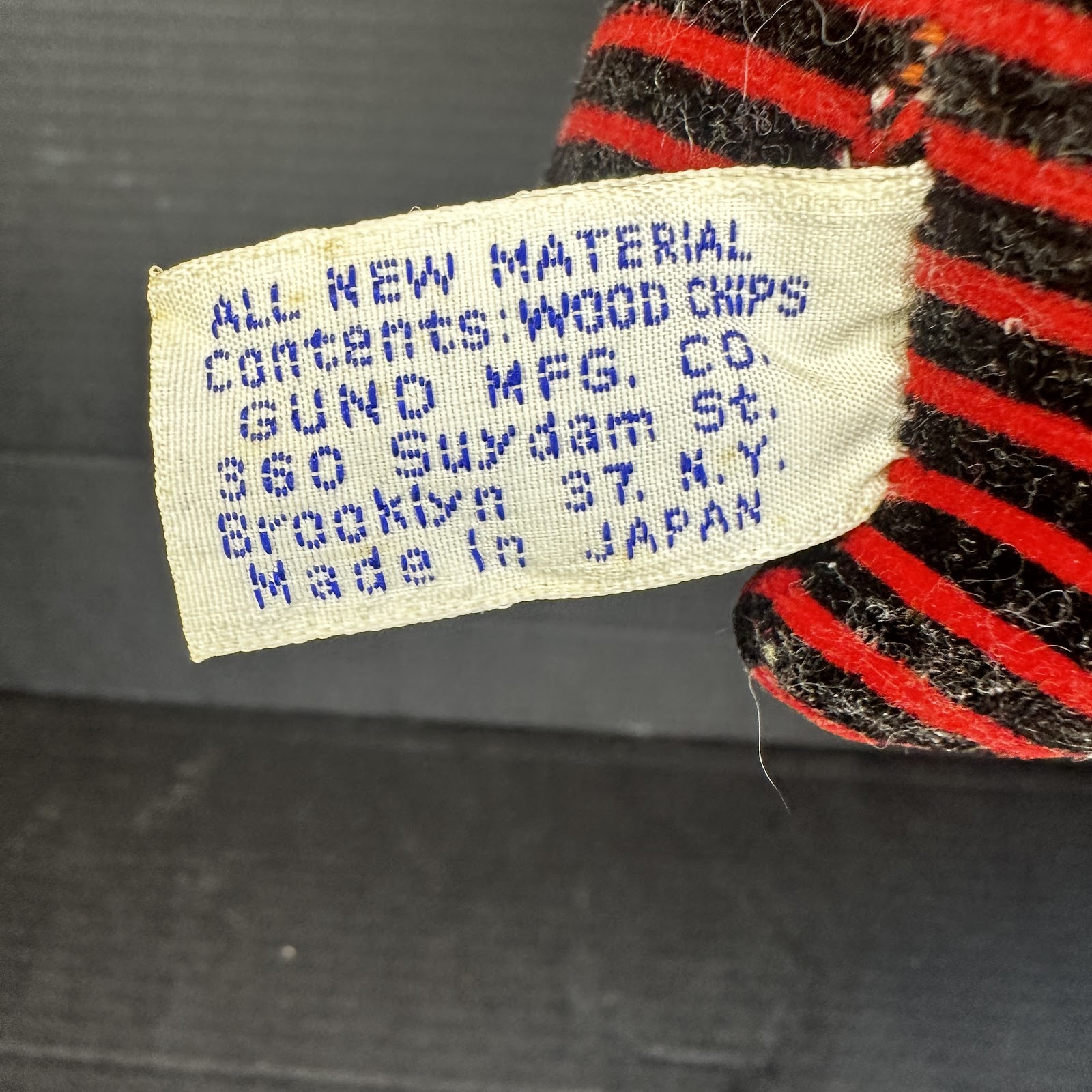
The Gund Manufacturing Company is one of the oldest and most respected names in the American stuffed animal business. Founded in 1898 by Adolph Gund, a German immigrant who settled in New York and began crafting novelty items, the company eventually moved its operations to Brooklyn — and the Brooklyn address stamped on pieces from this era has become a quiet hallmark of authenticity for collectors. When you see "Gund, Brooklyn" on a tag or label, you are looking at the real article from the brand's classic period.
By the 1950s, Gund had firmly established itself as a go-to supplier for department stores, gift shops, and toy retailers nationwide. The company held licensing agreements with major entertainment properties but also produced an enduring line of animals rooted in simple, cheerful nature imagery — dogs, bears, rabbits, and yes, ladybugs. These non-licensed pieces are often overlooked by casual collectors, yet among vintage toy enthusiasts they represent some of the finest examples of mid-century plush craftsmanship available.
Made in Japan: Craftsmanship in a Transforming World
The "Made in Japan" designation on this piece places it firmly in a fascinating chapter of postwar manufacturing history. Following World War II, Japanese industry — under American occupation and guided reconstruction — pivoted aggressively toward export manufacturing of consumer goods, including toys and novelties. By the early 1950s, Japanese-made stuffed animals, tin toys, and celluloid figures were flowing into American homes by the millions, often produced under contract for American brand names like Gund.
Far from being a mark of lower quality, the Made in Japan label on a vintage Gund piece signals careful, detail-oriented handwork. Japanese toy factories of this era were known for precise stitching, expressive faces, and the kind of small-batch attention that mass production would eventually eclipse. The hands that assembled this ladybug were skilled ones, working at a moment before plastic and polyester fiber fill had fully taken over the industry.
Speaking of fill: this ladybug is stuffed with wood chips — sometimes called excelsior or wood wool — a traditional fill material that predates synthetic stuffing by generations. Wood chip fill gives vintage plush toys a distinctive heft and firmness, a satisfying solidity that modern polyester-filled animals simply cannot replicate. It is also a reliable dating marker; by the mid-to-late 1960s, most American toy manufacturers had transitioned to synthetic fills. Finding wood chip fill intact and well-distributed is a genuine sign of age and originality.
Why Collectors Seek Out Mid-Century Gund
Vintage Gund plush from the 1950s and early 1960s occupies a sweet spot in the collectibles market. The pieces are old enough to be genuinely scarce — most were played with hard, and the survival rate for soft goods from this era is far lower than for ceramics or lithographed tin. Yet they are recent enough that many collectors have a direct emotional connection: a grandparent's shelf, a black-and-white photograph, a half-remembered Christmas morning.
The ladybug form itself adds a layer of charm that transcends nostalgia. Ladybugs have long carried associations with good luck, childhood wonder, and the gentle rhythms of the natural world. As a plush subject, the ladybug is relatively uncommon compared to bears and bunnies, which means surviving examples in solid condition attract genuine interest from both Gund specialists and broader vintage toy collectors.
This particular piece, with its wood chip fill still present and its Gund Brooklyn provenance intact, represents the kind of honest, unrestored vintage condition that serious collectors prize. It has not been re-stuffed, re-stitched, or freshened up for resale. What you see is what the 1950s made, and what time has preserved.
From an Estate Collection to Your Shelf
This ladybug arrived as part of a carefully assembled mid-century estate collection — a trove of playthings, decorative pieces, and memorabilia that spanned the postwar decades. Pieces like this one were kept together, stored with care, and passed down with intention. They are not orphaned curiosities pulled from a jumble sale; they are survivors of a particular domestic world, a household where things were made well and kept well.
For the collector who appreciates the tactile history of American childhood — the weight of wood chip fill, the feel of woven plush fabric, the small printed tag of a Brooklyn manufacturer — this little ladybug is a genuine find. Display her on a vintage toy shelf, tuck her into a mid-century nursery vignette, or simply let her occupy a corner of your desk as a reminder that the best-made small things endure longest.
Thinking of selling? Get a free, no-obligation offer.
One direct offer on your entire Disney collection — no commission, no auction wait. We help arrange the shipping.